

You’re not looking for your style. You’re running from it.
I’ve spent a lot of time watching artist interviews, reading their notes, listening to podcasts about creative process. And you know what struck me most?
None of them ever “found” their style. At some point, they just stopped looking for it.
Most people who are “searching for their style” do the same thing over and over: they look at other people’s work and think — I wish I could do that. They collect references. Analyze. Read about techniques. And never actually make anything.
That’s not a search. That’s procrastination with an aesthetic excuse.
Every artist I’ve studied says it differently, but the core idea is always the same: you don’t choose your style — it emerges through the work.
There’s a concept in physics called entropy. Without external force, any system naturally moves toward disorder. But here’s the thing: disorder isn’t a flaw, it’s the natural state. A crystal trying to stay perfect is just brittle.
That’s exactly what I see in the work of artists I love. Rough marks. Visible erasures. Mistakes that become texture. They’re not trying to be correct — and that’s precisely why you can’t look away.
I used to look at that and think: why can’t I do that?
Then I realized: I can. I’m just afraid it’ll look bad.
Here’s what’s actually happening when you “search for your style”:
You’re waiting for permission. Permission to draw messily. Permission to not know how it’ll turn out. Permission to be recognizable before you’ve even recognized yourself.
But style isn’t something you find. It’s what remains after you stop trying to control it.
That’s not my idea. It’s something I heard from dozens of artists — and eventually believed.
So how do you actually find it?
I pulled together everything I’ve heard from artists whose work genuinely moves me and tried to turn it into something practical. Not inspiration — a system. Here’s what I came up with.
Step 1. Collect 30 works that make you jealous.
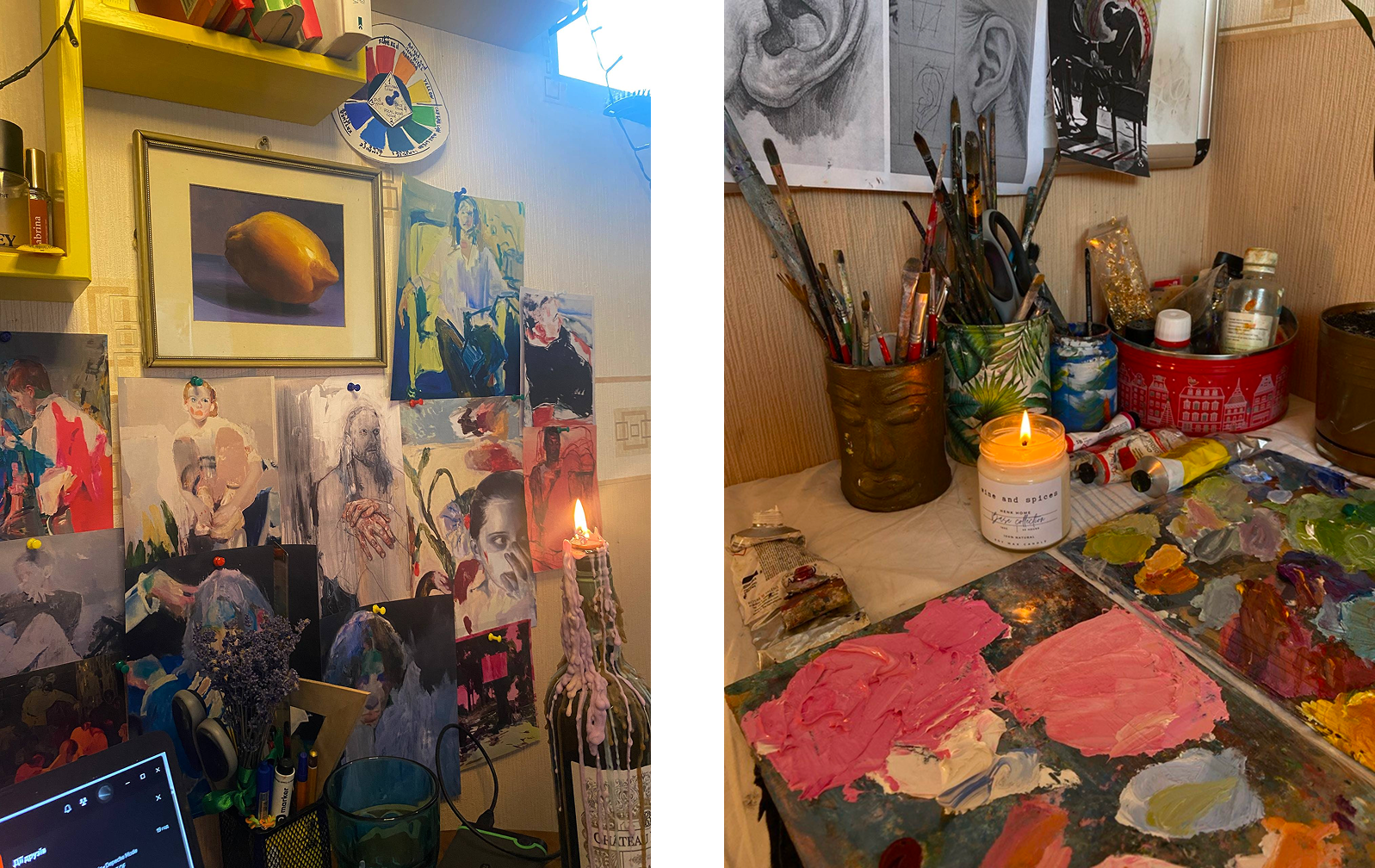
Not works you “like” — works that make you jealous. That sharp, uncomfortable feeling of I want that. Almost every artist I’ve listened to says this: collect honestly, without filtering for what counts as “serious enough.” Pinterest, Instagram, wherever.
Then look at everything together and ask yourself: what do these have in common? Color? Mood? The way shadows are handled? Write down three to five words. That’s your compass, not your map.
Step 2. Copy — but with a question.
Copying isn’t cheating, it’s a tool. Every master I’ve studied learned this way. Pick five works and draw them — not to replicate them, but to understand why the artist made those specific choices. What would you do differently? Where do someone else’s decisions feel too tight?
The discomfort you feel inside someone else’s style is a clue about your own.
Step 3. Draw one subject ten times in a row.
This is advice I kept encountering over and over, from different people in different forms. Don’t pick a favorite. Don’t stop. Just do all ten. The subject can be anything — loneliness, morning, exhaustion. What matters is that it’s yours, not just “pretty.”
Somewhere around the eighth or ninth sketch, something clicks. You’ll notice you keep making the same decisions. That’s you.
Step 4. Make a series of five pieces — and don’t explain them to anyone.
Don’t ask if people like them. Don’t justify your choices. Just put them side by side and look: is there something consistent that you didn’t plan? A color that keeps coming back? A shape that keeps appearing?
What shows up without your permission — that’s your style.
I didn’t invent any of this. I just spent a long time listening to people who had already walked this path — and put it all together.
Style emerges through repetition, not through searching. They all say the same thing. Just in different words.
I write about this every week — collecting thoughts from artists who inspire me and trying to turn them into something you can actually use. If this resonates, subscribe.
Next time we’ll talk about narrative in art — why work that’s “just beautiful” gets forgotten, while work that tells a story stays with you long after you’ve looked away.